From AI Rulemaker to AI Diplomat? Japan, Middle Power Diplomacy and the Two Dimensions of AI Diplomacy
Japan is a leading player on global AI rules, but its own foreign ministry is still piloting AI tools. That gap may weaken its credibility as a leader on AI governance in the longer term.
Fabian Whitfield Student author
Article · 8 November 2026 · 6 min read
Leadership abroad outpacing adoption at home
Middle powers such as Japan, Canada, Norway, and India are actively dismantling the assumption that artificial intelligence governance is strictly a bipolar contest between Washington and Beijing. Conventional strategic commentary routinely reduces AI diplomacy to a two-power struggle over foundational model performance, semiconductor supply chains, and bilateral spheres of influence. While geopolitical analysts Ian Bremmer and Mustafa Suleyman warn that this dynamic threatens to empower only the largest technological superpowers to write the rules of the international system, that outcome is not yet ensured1. By spearheading multilateral governance initiatives, Japan, in particular, shows that a focused middle power can shape emerging international frameworks through targeted statecraft rather than computational scale.
Japan’s current foreign policy exposes a sharp structural contradiction between its global leadership in 'Diplomacy for AI' and its nascent internal adoption of 'AI for Diplomacy'. Through the G7 Hiroshima AI Process, Tokyo successfully unified advanced industrial economies behind shared guiding principles and reporting mechanisms for frontier developers. Domestically, however, Japan’s Ministry of Foreign Affairs (MOFA) has lagged behind foreign counterparts in embedding generative tools into everyday institutional statecraft, policy analysis, and diplomatic reporting. This institutional gap between external rule-making ambitions and internal technological practice threatens to undermine the long-term credibility of Tokyo’s AI foreign policy
Why Japan can shape the rules
Japan’s contemporary AI strategy represents a direct evolution of 'niche diplomacy', an analytical concept defined by Andrew Cooper as the projection of international influence through specialised technical expertise and multilateral coalition-building2. Throughout the post-Cold War era, Tokyo deployed this method to reinforce the liberal international order, leveraging development assistance, alliance stability, and economic capability to gain leadership within Western-built institutions. Applying this established framework to artificial intelligence allows Japanese diplomats to capitalise on an unsettled regulatory landscape before hegemonic standards solidify. By anchoring its legitimacy in transparent consensus-building, Japan secures significant rule-making authority without possessing the massive private-sector infrastructure of the American or Chinese tech sectors.
The unprecedented nature of artificial intelligence governance allows Japan to write foundational international rules from the outset. Because AI policy remains highly fluid without a settled institutional framework or incumbent regulatory hegemon, middle powers possess a unique window of opportunity. By collaborating closely with nations in the Global South, Japan is actively designing the initial global standards for this emerging technology to ensure broad international compliance3.
A cautious approach to AI use
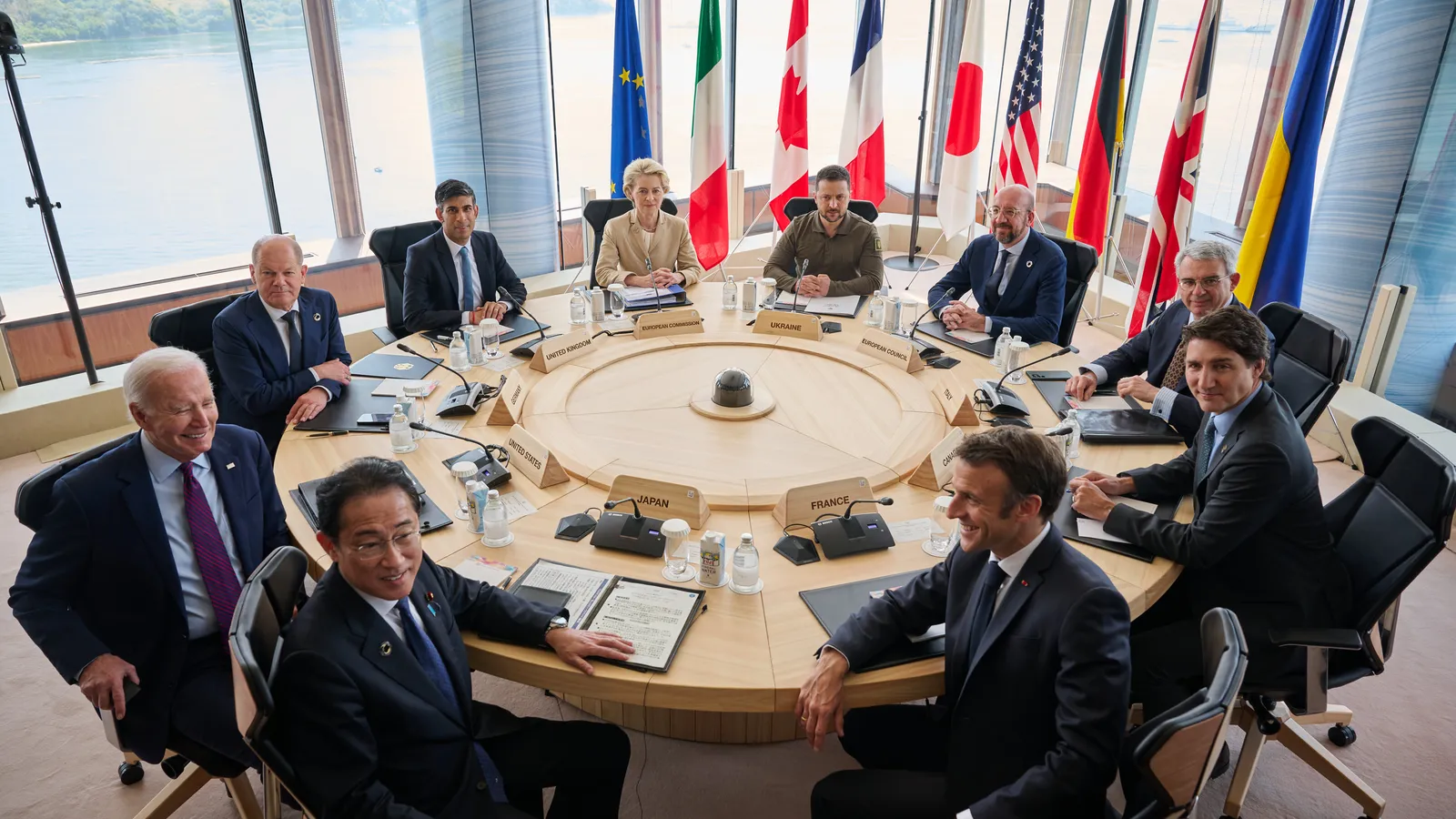
Japan has demonstrated leadership in global AI rulemaking, primarily through its successful stewardship of the 2023 G7 presidency. During this period, Tokyo transformed the Hiroshima AI Process into a concrete working framework, producing G7-ratified guiding principles backed by a developer code of conduct and a reporting mechanism4. The Ministry of Foreign Affairs has aggressively expanded this foundation through the Hiroshima Process Friends Group, sustained engagement with the OECD, and strategic bilateral partnerships across the Global South. By dominating the agenda at AI summits in Korea, the UK, and India, Japan is currently dictating the pace of global AI governance56.
Despite its rulemaking successes, Japan’s operational integration of AI into diplomacy remains cautious. By comparison, foreign ministries at the frontier of AI adoption have deployed tools at institutional scale: the US State Department rolled out its generative AI assistant, StateChat, across 98% of diplomatic posts worldwide under an overarching Enterprise AI Strategy7. In the UK, the AI Playbook for the UK Government sets civil service-wide standards, citing diplomatic use cases like Foreign Office document sensitivity reviews8.
Japan has not ignored the potential of AI tools, but its adoption is significantly slower than at the frontier. The Digital Agency published government-wide generative AI guidance, a functional equivalent to the UK playbook, yet the full rollout across the civil service is not planned until 20279. Within the Ministry of Foreign Affairs (MOFA), AI adoption remains confined to early-stage pilots and technical procurements: testing generative AI for drafting, meeting records, and document summarisation, with longer-term ambitions for archival precedent analysis10. Domestic pressure has already surfaced, with reporters questioning MOFA in 2023 press briefings regarding its slow uptake of tools like ChatGPT relative to foreign counterparts11. This measured pace also reflects broader national patterns, with private-sector research by Nomura Research Institute (NRI) showing Japanese generative AI uptake lagging substantially behind the United States12. Rather than a total absence of intent, Japan faces a maturity gap: its internal tools remain in pilot phases while its peers operate at scale.
Why the gap matters
The long-term viability of niche diplomacy in the AI era depends on states transitioning from setting static rules to mastering an evolving operational capability. Andrew Cooper demonstrates that middle powers thrive by leveraging targeted expertise and coalition-building in specialised spaces13. Because AI functions as a compounding technological capability, middle powers that successfully negotiate frameworks but fail to adopt the underlying technology risk long-term irrelevance. If a well-resourced state like Japan struggles to modernise its diplomatic practice despite its OECD engagement and Hiroshima Process credibility, smaller states in the Global South face an even steeper barrier to maintaining modern, AI-enabled statecraft.
Japan can leverage its established 'network power' to overcome its operational deficits and maintain its diplomatic advantage. David Singh Grewal defines network power as the ability to shape outcomes through control of the connections between overlapping international systems. Japan occupies a highly advantageous structural position inside the G7, the OECD, the UN, the G20, and a growing web of bilateral ties formalised by the 2025 Japan-India AI Cooperation Initiative1415. According to Anne-Marie Slaughter's framework of government networks, Japan can exploit this positional advantage through the everyday work of coordination, technical assistance, and information-sharing, provided it builds the necessary AI-enabled diplomatic infrastructure16.
Ultimately, middle powers must recognise that AI diplomacy requires winning both the contest for global governance and the race for operational capability. Japan has successfully demonstrated that a middle power can outmanoeuvre larger hegemons in shaping foundational AI rules. The determining factor for Japan’s continued relevance will be its ability to implement AI practices within its own statecraft, dictating whether its model is one that other middle powers can successfully follow.
Notes
-
Ian Bremmer and Mustafa Suleyman, The AI Power Paradox: Can States Learn to Govern Artificial Intelligence--Before It’s Too Late?, n.d. ↩
-
Andrew Fenton Cooper, Niche Diplomacy : Middle Powers after the Cold War / Edited by Andrew F. Cooper., Studies in Diplomacy (Macmillan, 1997). ↩
-
‘Japan-India AI Cooperation’, n.d., accessed 17 June 2026, https://www.mofa.go.jp/files/101011766.pdf. ↩
-
‘ G7 Leaders’ Statement on the Hiroshima AI Process’, October 30th 2023, Ministry of Foreign Affairs of Japan https://www.mofa.go.jp/files/100573466.pdf. ↩
-
‘Japan-India AI Cooperation Initiative’, January 2026, Ministry of Foreign Affairs of Japan, https://www.mofa.go.jp/files/101011766.pdf. ↩
-
‘AI Diplomacy’, Ministry of Foreign Affairs of Japan, accessed 17 June 2026, https://www.mofa.go.jp/ecm/eds/pagewe_000001_00361.html. ↩
-
U.S. Department of State, Enterprise Artificial Intelligence Strategy FY 2024-2025: Empowering Diplomacy through Responsible AI (U.S. Department of State, 2023), https://2021-2025.state.gov/the-department-of-state-unveils-its-first-ever-enterprise-artificial-intelligence-strategy/. ↩
-
Tommaso Spinelli et al., Launching the Artificial Intelligence Playbook for the UK Government – Government Digital Service, 10 February 2025, https://gds.blog.gov.uk/2025/02/10/launching-the-artificial-intelligence-playbook-for-the-uk-government/. ↩
-
Digital Agency, ‘Government AI “GENAI”|Digital Agency’, 29 July 2026, https://www.digital.go.jp/en/policies/genai. ↩
-
‘Detail | National Government - Japanese Government Procurement - Business Opportunities - Japan External Trade Organization’, ジェトロ, 2026, https://www.jetro.go.jp/en/database/procurement/national/articles/395952/2026061800260000.html. ↩
-
‘小野外務報道官会見記録’, Ministry of Foreign Affairs of Japan, accessed 7 October 2026, https://www.mofa.go.jp/mofaj/press/kaiken/kaiken24_000184.html. ↩
-
‘Reviewing the Survey of Japan, the U.S., China, and Germany: Japan’s AI Utilization Gap and the Road Ahead’, Nomura Research Institute (NRI), 16 April 2026, https://www.nri.com/en/media/journal/20260416.html. ↩
-
Cooper, Niche Diplomacy : Middle Powers after the Cold War / Edited by Andrew F. Cooper. ↩
-
David Singh Grewal, ‘Defining Network Power’, in Network Power, The Social Dynamics of Globalization (Yale University Press, 2008), https://www.jstor.org/stable/j.ctt1npvs2.5. ↩
-
‘Japan-India AI Cooperation’. ↩
-
Anne-Marie Slaughter, ‘Introduction’, in A New World Order (Princeton University Press, 2004), https://www.jstor.org/stable/j.ctt7rqxg.5. ↩
Perspectives are the authors' own views and do not represent their governments or institutions.
References
- Agency, Digital. ‘Government AI “GENAI”|Digital Agency’. 29 July 2026. https://www.digital.go.jp/en/policies/genai.
- Bremmer, Ian, and Mustafa Suleyman. The AI Power Paradox: Can States Learn to Govern Artificial Intelligence--Before It’s Too Late? n.d.
- Cooper, Andrew Fenton. Niche Diplomacy : Middle Powers after the Cold War / Edited by Andrew F. Cooper. Studies in Diplomacy. Macmillan, 1997.
- ‘G7 Statement’. n.d. Accessed 17 June 2026. https://www.mofa.go.jp/files/100573466.pdf.
- Grewal, David Singh. ‘Defining Network Power’. In Network Power. The Social Dynamics of Globalization. Yale University Press, 2008. https://www.jstor.org/stable/j.ctt1npvs2.5.
- ‘Japan-India AI Cooperation’. n.d. Accessed 17 June 2026. https://www.mofa.go.jp/files/101011766.pdf.
- Ministry of Foreign Affairs of Japan. ‘AI Diplomacy’. Accessed 17 June 2026. https://www.mofa.go.jp/ecm/eds/pagewe_000001_00361.html.
- Ministry of Foreign Affairs of Japan. ‘小野外務報道官会見記録’. Accessed 7 October 2026. https://www.mofa.go.jp/mofaj/press/kaiken/kaiken24_000184.html.
- Nomura Research Institute (NRI). ‘Reviewing the Survey of Japan, the U.S., China, and Germany: Japan’s AI Utilization Gap and the Road Ahead’. 16 April 2026. https://www.nri.com/en/media/journal/20260416.html.
- Shimbun, The Yomiuri. ‘AI Officials’ to Be Assigned to Embassies to Gather Information, Promote Safe AI Use Globally. 15 December 2025. https://japannews.yomiuri.co.jp/society/general-news/20251215-298611/.
- Slaughter, Anne-Marie. ‘Introduction’. In A New World Order. Princeton University Press, 2004. https://www.jstor.org/stable/j.ctt7rqxg.5.
- Spinelli, Tommaso, Senior Artificial Intelligence Change Manager, and GDS. Launching the Artificial Intelligence Playbook for the UK Government – Government Digital Service. 10 February 2025. https://gds.blog.gov.uk/2025/02/10/launching-the-artificial-intelligence-playbook-for-the-uk-government/.
- U.S. Department of State. Enterprise Artificial Intelligence Strategy FY 2024-2025: Empowering Diplomacy through Responsible AI. U.S. Department of State, 2023. https://2021-2025.state.gov/the-department-of-state-unveils-its-first-ever-enterprise-artificial-intelligence-strategy/.
- ジェトロ. ‘Detail | National Government - Japanese Government Procurement - Business Opportunities - Japan External Trade Organization’. 2026. https://www.jetro.go.jp/en/database/procurement/national/articles/395952/2026061800260000.html.