AI as Cultural Coach: Alyson King on preparing diplomats for the room
If AI cannot replace a diplomat in the room, it may be able to help them prepare for it.
Eugénie Chéné Student author
Interview · 8 November 2026 · 4 min read
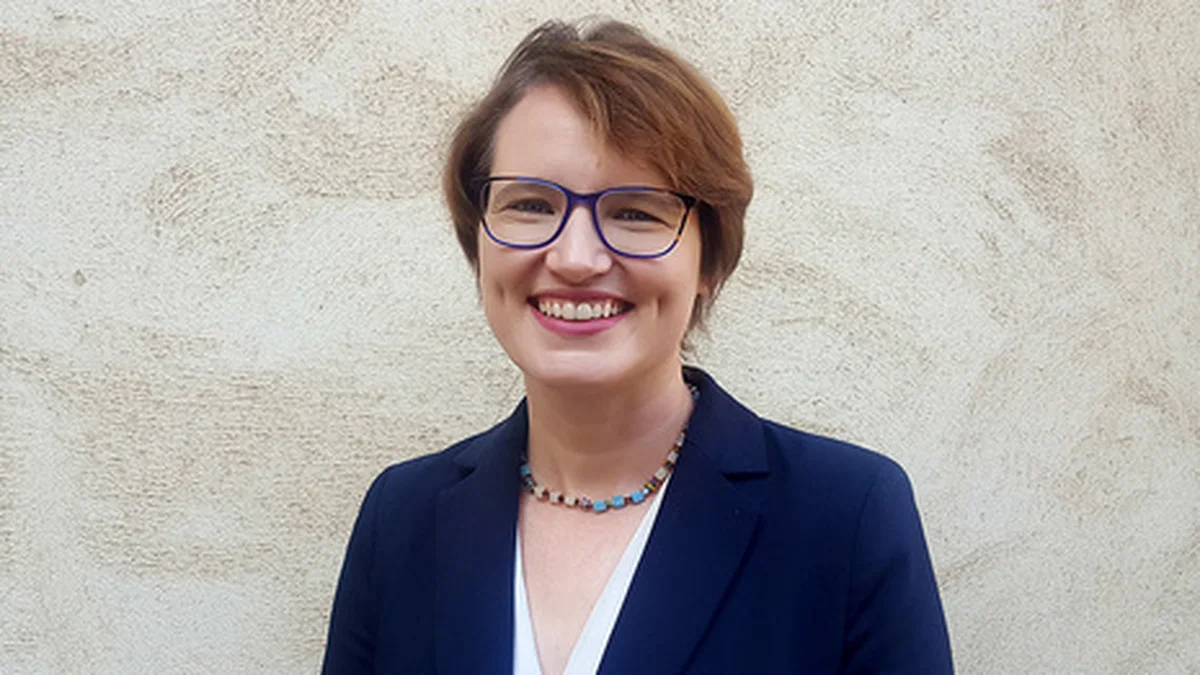
There is a question that follows every diplomat who has spent time thinking seriously about artificial intelligence. Alyson King OBE puts it plainly near the end of our conversation: will AI render diplomats unnecessary? Her answer is confident. No, at least not as long as human beings remain the ultimate decision-makers. "I think increasingly there'll be a premium on being able to see the whites of somebody else's eyes," she says. "That is the only way we will be able to trust what we are being told." But if AI cannot replace a diplomat in the room, it may be able to help them prepare for it.
King spent over two decades working for the British Foreign Service in Brussels, Beirut, Sudan and Kinshasa before leaving her post as HM Ambassador to the Democratic Republic of the Congo earlier this year. In October she became the first woman to serve as Principal of Brasenose College, Oxford, since its founding in 1509. She has watched institutions absorb new technology, resist it, and occasionally be transformed by it. And she has worked at the intersection of some of the most pressing questions in AI and global power: who controls the minerals that make the technology run, who shapes the rules that govern it, and who gets left out entirely.
The question of whether AI will replace diplomats is not new, an earlier version was asked when the internet arrived. Back then, people wondered whether foreign ministries were still necessary now that governments could read the news electronically. That thinking, King says, "has very much gone away. No serious country is cutting back its diplomacy on the grounds that they can read The Economist." AI is larger and faster than the early internet, but the same logic holds: as machine-generated content multiplies, the value of a trusted human presence in the room goes up, not down.
The most practical value AI has added to diplomatic work so far is the least glamorous kind. In many embassies, someone's job is to go through newspapers and online sources each morning and produce a summary for the ambassador and senior staff. It is necessary but not particularly skilled work, and it consumes hours that could go elsewhere. "That's not hugely value-added," King says. "Let the machine do it." And freeing up that time, she suggests, is precisely where AI earns its place by creating the conditions for diplomats to do it better.
But the limits appear quickly. King spent three years in a country where social media operates in a volatile mix of French, Lingala, Swahili, and fast-moving urban slang. "We used to joke that people would say things in Lingala that they didn't want the foreigners to know about." AI struggled badly here. It doesn't cope well with less widely spoken languages, dialects, or the kind of rapidly evolving registers that carry the most politically sensitive content. The places where AI works least well tend to be exactly the places where diplomatic intelligence matters most.
The most underexplored use case King raises is AI as a cultural coach. The most useful training she received in her Foreign Office career was cultural coaching, frameworks for understanding how different societies approach authority, hierarchy, and trust. How hierarchical is this culture? How does it handle disagreement? These things take years of field experience to absorb. "I would suggest that if diplomats have important engagements, one of the things they might use AI for is as a coach to prepare them." Not doing the work of relationship-building, but helping a novice diplomat walk into the room less blind.
Where human diplomats lead and AI can only support, the question of accountability becomes easier to answer but when that boundary blurs, it becomes much harder. King points to the growing use of AI in military targeting as a cautionary example. According to her, the role of AI in military targeting has both contributed to mistakes where civilians have been harmed and made it harder to identify who is responsible for the consequences. Diplomacy can learn from these growing pains. The clearer the boundary between human judgment and machine output, the less room there is for responsibility to dissolve into the algorithm.
King is clear that AI will not take over foreign policy decision-making as human decisions are mainly shaped by politics, psychology, personal relationships, domestic pressure. That is precisely why the diplomat must lead, and the machine must support, not the other way around. Where that boundary is respected, AI can help with faster analysis, better preparation, more time for the human work that moves the needle.
What AI will do, she thinks, is raise the pace and standards of diplomatic interaction, and in doing so, make the irreducibly human parts of the job more visible by contrast. Senior representatives delivering messages in person. Leader-level meetings to resolve the hardest problems. Embassies on the ground that understand things which have never been digitised and never will be. "You will always want that human interpretation as a complement to the data-crunching and analysis the machines will provide much quicker."
The future of AI in diplomacy will not be decided in strategy documents or conference halls. It will be worked out gradually, post by post, in the space between what a machine can process and what only a human presence can read. AI can free up the hours, prepare the brief, and coach the diplomat before they walk in. What it cannot do is sit across the table and earn the trust that diplomacy ultimately runs on. The whites of someone else's eyes, as King puts it, are still the only reliable signal. And no model, however capable, has learned to read them yet.
Perspectives are the authors' own views and do not represent their governments or institutions.
References
- Overseas Development Institute (ODI) (2025) Critical minerals, critical moment: Africa’s role in the AI revolution. Available at: https://odi.org/en/insights/critical-minerals-critical-moment-africas-role-in-the-ai-revolution/ [Accessed: 12 August 2026].
- GOV.UK (2023). Alyson King OBE. [online] GOV.UK. Available at: https://www.gov.uk/government/people/alyson-king [Accessed 9 Nov. 2026]. Crown copyright, licensed under the Open Government Licence v3.0.